



Indian Accounting Standards & Corporate Accounting Practices By T P Ghosh (Set of 3 Vols.) – 10th Edition 2026
Original price was: ₹9,995.00.₹7,495.00Current price is: ₹7,495.00.
Indian Accounting Standards & Corporate Accounting Practices By T P Ghosh (Set of 3 Vols.) – 10th Edition 2026
Description
Indian Accounting Standards & Corporate Accounting Practices is widely regarded as India’s most authoritative, comprehensive, and practice-oriented commentary on the Ind AS framework. Spanning over 5,000 pages across three meticulously structured volumes, Prof. (Dr) T.P. Ghosh presents a definitive work that accomplishes four core objectives:
- Offers deep conceptual interpretation of every Ind AS, explaining not just the rules but the underlying principles
- Connects Ind AS with global IFRS developments, including IFRS 16, IFRS 17, IFRIC 22, IFRIC 23, and the upcoming IFRS 18 and IFRS 19 (effective 2027)
- Integrates Indian regulatory requirements, particularly the Schedule III Division II and Division III reporting formats
- Demonstrates reporting practices through:
- Over 400 corporate disclosure extracts from Indian companies
- More than 700 interpretative and numerical examples, including valuation models, EPS computations, impairment analyses, ECL mechanics, and hedge accounting illustrations
- Numerous diagrams, decision trees, and flowcharts that simplify complex concepts
What sets this work apart is its ability to explain the why behind every requirement—how companies actually apply Ind AS, where they encounter judgmental issues, and how regulatory and practical considerations intersect. Each chapter follows a clear and instructive structure: principle → analytical interpretation → computational illustration → corporate practice → regulatory frame → disclosure template.
Far more than a reference book, this three-volume set serves as a complete learning, application, and interpretative framework for professionals and organisations navigating the full breadth of India’s Ind AS landscape.
This book is intended for the following audience:
- Corporate & Professional Users – CFOs, financial controllers, reporting heads, audit partners, internal audit teams, valuation specialists, ECL modellers, treasury professionals, and reporting teams across NBFCs, banks, and financial institutions who require authoritative guidance on Ind AS application, presentation, and compliance
- Advisory, Consulting & Technical Specialists – Transaction advisory teams, deal accounting professionals, IFRS/Ind AS conversion experts, fair value measurement practitioners, financial modellers, and risk management or treasury specialists involved in complex financial reporting, structuring, and interpretation
- Academics & Examination Candidates – Professors, researchers, doctoral scholars, and students pursuing CA, CS, CMA, ACCA, IFRS certifications or MBA (Finance/Accounting) programmes who seek a comprehensive, concept-driven and practice-oriented understanding of Ind AS and corporate reporting
- Corporate Accountants & Finance Teams – Professionals responsible for consolidation, group reporting, financial instruments accounting, leases, revenue recognition, business combinations, and other advanced Ind AS areas requiring clear interpretative and disclosure guidance
The Present Publication is the 10th Edition, authored by Prof. (Dr) T.P. Ghosh, with the following noteworthy features:
- [The Only Indian Work Fully Integrating Ind AS, IFRS & Schedule III]
- This work uniquely brings together Ind AS requirements, evolving IFRS developments, interpretation bulletins, Illustrative Examples, and the Companies Act’s Schedule III framework
- The author consistently demonstrates how global standards influence Indian reporting—for instance, explaining IFRS 18’s revised profit-and-loss structure in relation to Ind AS 1, drawing parallels between IFRS 19 and Ind AS 112, and aligning Ind AS 117 with IFRS 17. This offers readers a genuinely global-to-local understanding of financial reporting
- [Deep, Interpretative Commentary Across All 67 Chapters] Each Ind AS is treated as a full subject rather than a brief summary. The author analyses the rationale, conceptual framework linkages, and underlying economic substance of every requirement. Examples include:
- Ind AS 113 (Fair Value Measurement) – Comprehensive coverage of market, income and cost approaches; fair value hierarchy; risk-adjusted discounting; calibration of unobservable inputs; Level 3 techniques; and multi-period excess earnings models presented in stepwise detail
- Ind AS 115 (Revenue) – Expansion of the five-step model to address practical issues such as warranties, licensing, breakage, sales with return rights, renewals, variable consideration, consignment arrangements and bill-and-hold transactions
- Ind AS 109/32/107 – Volume 3 effectively becomes a standalone textbook on financial instruments, covering classification, ECL modelling, hedge accounting, derivatives, embedded derivatives, derecognition, and detailed disclosure requirements
- [Unmatched Depth of Practical Examples] The set contains:
- 700+ worked examples covering leases, foreign currency translation, revenue recognition, impairment and ECL models, derivative valuations, etc.
- 400+ real corporate case studies drawn from the financial statements of Indian companies across manufacturing, IT, telecom, pharma, NBFCs, banks, and conglomerates—showcasing actual accounting policy language, footnotes and disclosure formats
- The breadth of illustration is unparalleled in any other Indian Ind AS publication.
- [Complete 360° Coverage of All Financial Reporting Components] The volumes collectively provide:
- Full standalone financial statement formats
- Comprehensive consolidated financial statements with detailed walkthroughs of Ind AS 110/111/112
- Examples on OCI presentation, EPS (basic & diluted), Statement of Changes in Equity, and Cash Flow Statements
- Extensive guidance on segment reporting and identification of the Chief Operating Decision Maker (CODM) under Ind AS 108
- Numerous illustrations for related party disclosures
- [Extensive Treatment of Complex & Judgment-Heavy Topics] The author addresses areas that typically challenge preparers, including:
- Component accounting, useful life assessments and re-estimation
- ECL modelling, SICR indicators, forward-looking information and macroeconomic overlays
- Valuation of unquoted equity instruments and calibration adjustments
- Revenue variable consideration constraints and significant financing components
- Valuation of share-based payments using Black–Scholes and Binomial models
- Lease modifications, reassessments, contract combinations, and lessor classification
- Business combination adjustments, goodwill allocation and NCI measurement
- Ind AS 21’s treatment of non-exchangeable foreign currency situations
- Each topic is supported by conceptual explanation and numerical examples for clarity
- [A Practical ‘How-To Guide’ on Fair Value Measurement] The treatment of Ind AS 113 in Volume 2 functions almost as a dedicated valuation manual. It covers:
- Market multiples such as P/E, EV/EBITDA and P/B
- Detailed DCF models and risk-adjusted present value techniques
- Matrix pricing for illiquid bonds, complete with tabulated computations
- Swap valuation, including SOFR-based bootstrapping, is explained across several pages
- Multi-period excess earnings models with derivation of contributory asset charges
- This is one of the most advanced and practitioner-oriented fair value discussions available in India
- [Sector-specific and Transaction-specific Insights] The book illustrates Ind AS application across diverse industries and transaction types, including:
- Power sector PPAs
- Service concession arrangements
- Telecom revenue models
- Real estate recognition issues
- NBFC and banking ECL approaches
- Mining industry stripping costs
- Agriculture fair value adjustments
- Pharmaceutical licensing arrangements
- [Comprehensive Disclosure Templates and Implementation Aids] The Ind AS 107 section in Volume 3 provides a complete set of disclosure tools, including:
- Category-wise disclosure templates
- Maturity analyses and liquidity risk schedules
- Market risk, credit risk and interest-rate risk tables
- Collateral disclosures
- Hedge accounting reconciliations
- Transfer, derecognition and continuing involvement matrices
- These templates greatly support preparers in meeting detailed Ind AS disclosure requirements
The coverage of the book is as follows:
- Volume 1 — Presentation of Financial Statements | Foundational, Structural & Consolidation Standards
- Part I – Transition to Ind AS
- Covers first-time adoption under Ind AS 101, including exceptions, optional exemptions, reconciliations, transition balance sheet requirements and practical transition mechanics
- Part II – Ind AS-based Financial Reporting Framework
- Explains the integration of Ind AS 1 with Schedule III, detailed rules for current–non-current classification, and earnings per share under Ind AS 33—including complex capital structures
- Part III – Standalone Financial Statements
- Provides extensive guidance on preparing the Statement of Profit and Loss (including OCI presentation), Statement of Cash Flows (direct and indirect methods), material accounting policies, and a structured approach to drafting Notes to Accounts
- Part IV – Consolidated Financial Statements
- Covers control evaluation under Ind AS 110, classification of joint arrangements (joint operations vs joint ventures), the equity method under Ind AS 28, NCI measurement and full templates for consolidated reporting
- Part V – Presentation Principles
- Discusses Ind AS 8, 10, 24, 105, 108 and 114, along with complex illustrations on CODM identification, reclassifications, and discontinued operations
- Part I – Transition to Ind AS
- Volume 2 — Elements of Financial Statements | Recognition, Measurement & Disclosure Across All Major Ind AS Areas
- Part VI – Measurement Principles
- A comprehensive discussion of valuation techniques under Ind AS 113, updated foreign currency translation rules under Ind AS 21, share-based payment modelling (volatility, risk-free rates, dividend assumptions), and hyperinflation accounting under Ind AS 29
- Part VII – Revenue (Ind AS 115)
- Expands the five-step model with more than 50 examples, covering licensing, royalties, warranties, breakage, returns, repurchase agreements and other industry-specific issues.
- Part VIII – Inventories, Expenses, Taxes & Provisions
- Covers Ind AS 2, 12, 19, 23, and 37, including detailed actuarial valuation examples for employee benefits, complex scenarios on deferred tax (including Pillar Two rules), and full guidance on inventory costing, provisions and borrowing costs
- Part IX – Assets, Depreciation & Impairment
- Includes recognition and componentisation of PPE, decommissioning liabilities, comprehensive coverage of intangible assets (including cloud-computing configuration costs and cryptocurrencies), and in-depth CGU-level impairment modelling under Ind AS 36
- Part X – Government Grants
- Explains the distinction between grants and government assistance, accounting for forgivable loans, capital grants, interest subsidies and grant repayments
- Part XI – Business Combinations
- Covers the acquisition method, valuation of contingent consideration, accounting for replacement awards, and treatment of common control transactions using the pooling-of-interests method
- Part VI – Measurement Principles
- Volume 3 — Financial Instruments | India’s Most Complete Ind AS Commentary on Financial Instruments
- Part I – Presentation (Ind AS 32)
- Clarifies the distinction between financial liabilities and equity, puttable instruments, compound instruments and treatment of treasury shares
- Part II – Recognition, Classification & Measurement (Ind AS 109)
- Explains business model assessment, SPPI testing with multiple examples, effective interest rate mechanics, and measurement under amortised cost, FVOCI and FVPL
- Part III – Derivatives & Embedded Derivatives
- Covers currency forwards, options, swaps, bifurcation of embedded derivatives, and distinctions between commodity and financial derivatives
- Part IV – Reclassification
- Discusses reclassification triggers and the accounting consequences across categories
- Part V – Impairment (ECL Model)
- Detailed analysis of 12-month vs lifetime ECL, SICR evaluation, macroeconomic overlays, forward-looking information and treatment of collateral
- Part VI – Hedge Accounting
- Explains fair value, cash flow and net investment hedges; effectiveness testing; and the treatment of time value, forward elements and basis spreads
- Part VII – Derecognition
- Covers pass-through arrangements, continuing involvement, and partial derecognition scenarios
- Part VIII – Equity Swaps & Liability Extinguishment
- Details IFRIC 19 mechanics with illustrative examples on settlement of financial liabilities using equity instruments
- Part IX – Disclosures (Ind AS 107)
- Provides extensive templates and illustrations for credit, liquidity and market risk disclosures; transfer and derecognition disclosures; offsetting; and sensitivity analyses
- Part I – Presentation (Ind AS 32)
Every chapter across the three volumes follows a consistent and highly instructional architecture:
- Conceptual Grounding – Introduces the principle, links to the conceptual framework and explains relevant IFRS parallels
- Principle-based Exposition – Breaks down the wording, structure and intent of the standard, paragraph by paragraph
- Interpretative Commentary – Offers expert analysis on judgment areas, alternative interpretations, and practical application issues
- Numerical Examples & Valuation Tables – Includes DCF models, present value techniques, risk adjustments, option valuations, swap valuations and other computations
- Illustrative Corporate Disclosures – Extracts and annotates Ind AS disclosures from Indian companies for practical insight
- Common Pitfalls & Practice Issues – Highlights frequent errors, misinterpretations and practical complexities faced by preparers
- Summary Tables, Checklists & Diagrams – Uses charts, flow-logics and structured tables to simplify complex standards and aid rapid learning
Additional information
| BINDING | Hardcover |
|---|---|
| AUTHOR | T P Ghosh |
| EDITION | 2026 |
| ISBN | 9789371269148 |
| PUBLICATION | TAXMANN PUBLICATIONS |
Related products
-
- Out of StockSale!
- COMPANY LAW, CORPORATE LAWS, BUSINESS LAW, SEBI, SECURITIES, STOCK, FEMA, COMPETITION, MSMEs, START-UPs, INDUSTRIES, TAXATION LAW, INDIRECT TAX, DIRECT TAX, INCOME-TAX, GST, TDS, CA BOOKS
MSME READY RECKONER
- Original price was: ₹1,795.00.₹1,350.00Current price is: ₹1,350.00.
- Read more
-
-
- Out of StockSale!
- TAXATION LAW, INDIRECT TAX, DIRECT TAX, INCOME-TAX, GST, TDS, CA BOOKS
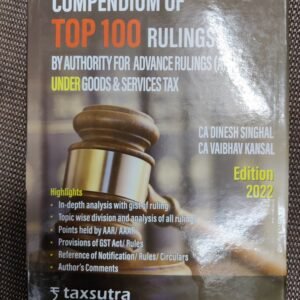
COMPENDIUM OF TOP 100 RULINGS UNDER GOODS & SERVICES TAX
- Original price was: ₹1,095.00.₹825.00Current price is: ₹825.00.
- Read more
-
-
- Out of StockSale!
- TAXATION LAW, INDIRECT TAX, DIRECT TAX, INCOME-TAX, GST, TDS, CA BOOKS
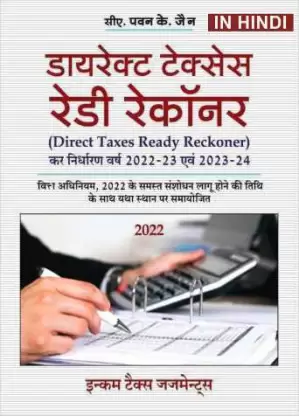
DIRECT TAXES READY RECKONER (AY 2022-23 & 2023-24)- IN HINDI
- Original price was: ₹1,795.00.₹1,347.00Current price is: ₹1,347.00.
- Read more
-

Reviews
There are no reviews yet.